
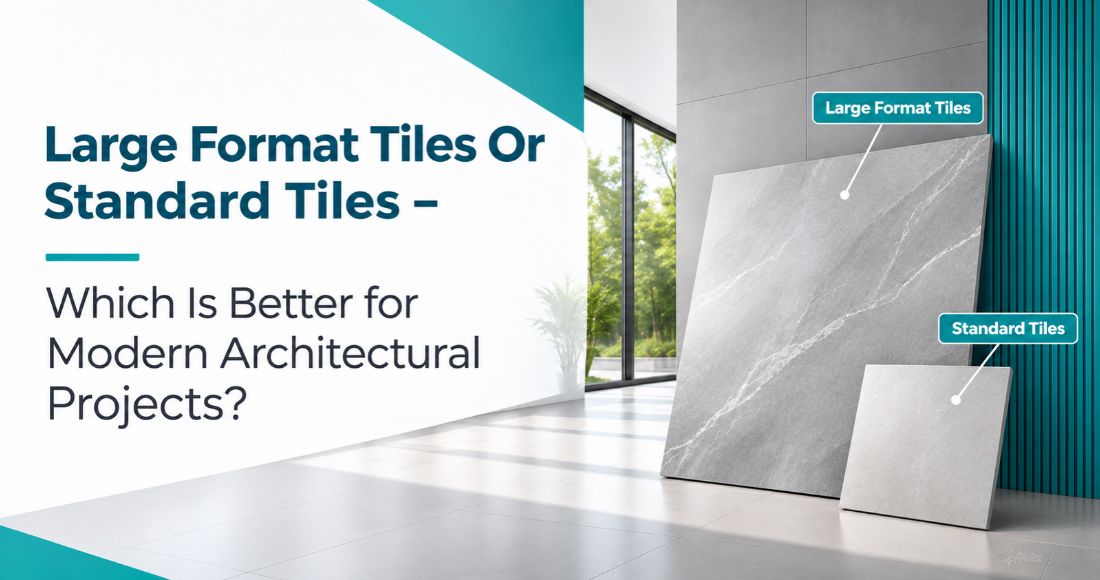
Large Format Tiles Or Standard Tiles- Which Is Better for Modern Architectural Projects?
Modern architecture trends favour designs that ensure space, efficiency, visually appealing environments and aesthetics. In residential and commercial structures, materials used for flooring and walls significantly influence the design. Large-format and standard tiles are among the most common.
However, which of these should you use in your current architectural work?
That depends on the needs of your project. It would be great to understand the difference between the two.
What Are Large Format Tiles?
Large-format tiles are large-sized ceramic or vitrified tiles designed to cover larger surface areas with fewer pieces. The tiles are commonly used in modern residential interiors, high-end commercial premises, hotels and architecture.
The larger size helps create a smoother, more consistent look, since there will be fewer grout lines on the surface.
Some of the patterns for large-format tiles include designs inspired by marble, natural stone, concrete, and other surfaces.
What Are Standard Tiles?
Standard tiles are ordinary tiles with sizes used in residential and commercial construction. There are many designs, colours, and sizes of standard tiles.
The small size makes it easy for standard tiles to fit into smaller spaces and complex designs. The tiles are flexible enough to be installed and replaced easily.
Some of the places where you find standard tiles include bathrooms, kitchens, bedrooms and passageways.
Large Format Tiles and Standard Tiles: Important Differences
1. Appearance and Consistency in Design

One of the main features of large-format tiles is creating visually unbroken surfaces, which helps achieve a spacious, premium appearance due to fewer grout lines.
Standard tiles tend to form joints and patterns in the floor surface, which is very useful if the design involves patterns or colour contrasts.
2. Space Creation Effect

Large-format tiles tend to make rooms look bigger since they have fewer grout lines, which help create a continuous surface. They are especially useful in large open living spaces, big lobbies and modern business interiors.
Standard tiles are also able to look very good in small rooms, especially when they are chosen in light colours.
3. Installation Needs

Large-format tiles require proper planning and substrate preparation, as well as the skills of experienced professionals to install them properly.
Standard tiles are easier to handle and install because they are smaller.
4. Maintenance and Cleanliness

The reduced number of grout lines in large-format tiles helps reduce areas prone to dirt accumulation and staining. It also makes cleaning easy.
Standard tiles, on the other hand, have more grout lines, which may require extra attention during cleaning and maintenance. Proper grout selection and regular maintenance help in maintaining their appearance.
Which Tile Should You Choose for Modern Architectural Projects?
It is important to note that one size does not fit all when choosing between large-format and standard tiles.
Large-format tiles are preferred for luxurious residences, hotels, larger commercial interiors, and contemporary architecture because of their elegant, sleek appearance.
Standard tiles work well for small rooms, detailed patterns, and projects requiring design flexibility.
The Right Choice with Qutone Ceramic Tiles
The selection of the correct tile format is based on aesthetic and functional considerations.
Modern architectural projects require surfaces that not only harmonise with the architectural concept but also meet practical requirements.
The portfolio of Qutone Ceramic features a wide range of tile formats which were created in order to meet the modern architectural and interior design requirements. The company focuses on design, innovation and technology, allowing architects and developers to experiment with surfaces.
Whether you design a luxurious interior for a private home or a large commercial project, the right choice of tile format will make the difference.
Check out Qutone Ceramic's collections and find the right tile format for your next architectural project.
Write a Comment